
- February 17, 2026
- By Gordon Harling
The rapid uptick in defence investment under the Carney government is an opportunity to strategically bolster Canada’s semiconductor ecosystem as part of a broader re-industrialization effort.
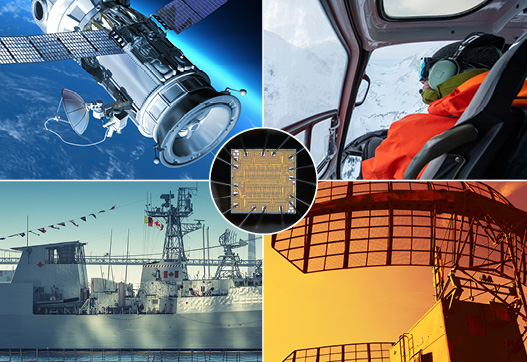
Semiconductor-based technologies used for defence are often proven first in commercial industries where equipment must operate securely and reliably in harsh conditions. Semiconductors are critical infrastructure at the heart of industry, and military-grade technologies have a long history of being repurposed for broader societal and economic benefit.
Canadian companies in mining, agriculture, automotive, marine and oceans, healthcare and biotechnology are all able to compete globally by integrating the intelligence made possible by semiconductor technologies into specialized equipment and software.
The dual-use nature of defence technologies hammer home the need for a cohesive, national strategy to accelerate the expansion of Canada’s semiconductor sector industry so it can continue to contribute to the nation’s sovereignty, security and productivity.
The dual-use nature of defence technologies hammer home the need for a cohesive, national strategy to accelerate the expansion of Canada’s semiconductor sector industry
Canada is focused on where it excels
Our heritage in telecommunications – think Nortel and Blackberry – have put Canada in a strong position to advance key semiconductor technologies and secure communications, which are integral to defence:
- Compound semiconductors, which combine two or more different elements, sit at the core of modern radar, secure communications, power conversion and space systems. The federal government is already funding further development through the Strategic Response Fund and the FABrIC program, managed by CMC Microsystems.
- Photonics, which uses light to carry and process information through fibres or tiny chips and turns it into useful signals for the internet and sensors, are found throughout defence applications, including communications and navigation. The federal government earmarked money in its 2025 budget to advance photonic networking, sensing and secure communications as part of a broader initiative to fund quantum technologies for defence.
- Physical artificial intelligence (AI) combines AI algorithms with hardware such as cameras, lidar, microphones, robots, drones or vehicles so machines can perceive, reason and take actions in real-world environments. The 2024 Department of National Defence / Canadian Air Force AI Strategy frames AI as a strategic capability.
- Quantum-based ultra-precise sensing and ultra-secure communication are strategic technologies for defence globally. Canada is funding their development through the Defence Industrial Strategy as well as the recently launched Canadian Quantum Champions Program (CQCP).
Launched as a rival to the U.S. DARPA’s Quantum Benchmarking Initiative, which Canadian firms have also joined, the CQCP aims to retain quantum talent and IP in Canada amid competition from U.S. defence funding. Participating companies in both programs, including Xanadu, Nord Quantique and Photonic reflect our rapidly maturing Canadian capabilities in quantum and the breadth of our talent pool, which was spawned by our telecommunications industry.
The CQCP exemplifies how Canada can directly accelerate development of semiconductor technologies for defence, as does the recently announced Regional Defence Investment Initiative, which specifically calls out microelectronics with defence applications as qualified candidates for the program.
Semiconductors and defence are synergistic
Aligning semiconductor innovation with national defence ambitions is not without precedent, and many innovations we take for granted in everyday life were borne out of military endeavours.
GPS was initially created by the U.S. Department of Defence in the 1970s for guiding missiles from submarines. Integrated circuits (ICs), the foundational semiconductor technology powering countless life-saving medical devices, including pacemakers and defibrillators, were driven to mass production by U.S. military programs such as the guidance systems for the Apollo missions.
Canada’s semiconductor industry has been intertwined with defence since the early Cold War, primarily as a dual-use supplier embedded in a broader Canada–U.S. defence industrial system.
The dual-use nature of many defence technologies illustrates the societal benefit that comes from building robust semiconductor technologies that can operate reliably and securely in dynamic and extreme conditions.
- Compound semiconductors are critical for automotive power systems and mining equipment that feature rugged designs suited for harsh environments, making them ideal for defence applications such as sensors and radar.
- Sonar, navigation, and engine-control technologies for marine environments can be adapted for naval surveillance and submarine detection to protect regions such as the Canadian Arctic. These dual-use advancements leverage Canada’s strong ocean technology ecosystem, where harsh marine conditions demand robust, reliable chips.
- Precision farming sensors developed for agricultural crop monitoring can be repurposed for military surveillance in many different environments.
- Emergency services and response applications are also an ideal proving ground for semiconductor technologies that also have use in defence. Many dual-use technologies designed for public emergency situations, such as extreme weather and natural disasters, can contribute to our national security.
Advancing and proving out the rugged capabilities of semiconductor technologies in commercial sectors helps solutions get to market faster and grow the economy. This enables Canadian companies to scale faster with paying customers who become references for defence procurement opportunities.
The cross-pollination of commercial industries with defence demonstrates how dual-use technologies can help secure the country while offering broader societal benefits, grow key sectors of the economy and create jobs.
Existing funding mechanisms can be easily replicated
Revitalizing the powerful synergies between Canada’s semiconductor capabilities and defence ambitions requires a cohesive strategy. We must create an environment conducive to building dual-use technologies that can be rapidly and widely deployed.
The existing FABrIC program, launched in 2024 to boost Canada’s semiconductor ecosystem, provides a ready-made blueprint to build a supportive ecosystem that brings together defence authorities, academic institutions and SMEs.
A FABrIC-like initiative to fund training, prototyping and development, as well as necessary research and fabrication facilities, will enable Canada’s semiconductor industry to advance technologies for defence applications in the areas of photonics, compound semiconductors, quantum technologies and physical AI.
Ottawa’s commitment to increasing Canada’s contributions to NATO and the exigencies of defence present a natural and compelling opportunity to invest in a more robust domestic semiconductor ecosystem — one with broad industrial, societal and economic benefits.
Gordon Harling is President and CEO of CMC Microsystems, Canada’s Semiconductor Powerhouse. For over 40 years, it has delivered cost-effective access to tools, platform technologies and state-of-the-art design, manufacturing, and testing capabilities, essential for emerging companies, R&D and academic research in Canada and around the world. In 2024, it was mandated by the Government of Canada to manage FABrIC, a five-year, $217M initiative to advance domestic capabilities in advanced semiconductor design and manufacturing.