

CMC Microsystems is excited to open registration for the 2026 CMOS for Photonics Workshop
Held in partnership with the SiEPIC Program, and leading professors from UBC, Concordia, and Carleton University, along with FABrIC — a project funded by the Government of Canada and managed by CMC Microsystems, this in-person workshop is collocated with the IEEE Silicon Photonics Conference (Ottawa, April 13-15, 2026).
What You Will Learn
Participants will master the design of CMOS devices tailored to power Photonic Integrated Circuits (PICs). The curriculum focuses on how these components interface and provides advanced training in creating Verilog-A models—a critical skill for system optimization.
Participants will be able to design their own chips and submit designs to fabrication through CMC to TSMC, GlobalFoundries 45SPCLO and others.
Pre-Requisites
No prerequisite is required for this training. For the hands-on part, basic knowledge of working with Cadence Virtuoso tools is recommended.
Schedule
| Time | Thursday April 16, 2026 | Friday April 17, 2026 | Saturday April 18, 2026 |
| 09:00 |
| MRM Driver Circuits (80 min) | MZM Driver Circuits (80 min) |
| 10:30 | Break | Break | Break |
| 11:00 | Basic of MOSFETs, a simple cascode amplifier, Diff. amps & Inverters (80 min) |
|
|
| 12:30 | Lunch | Lunch | Lunch |
| 13:30 | Hands-on Simulating Photonic devices in Cadence Verilog-A (80 min) | Hands-on Simulating an MRM TX in Cadence (80 min) | Hands-on simulating an entire link with MZM TX in Cadence (80 min) |
| 15:00 | 30 min Break | 30 min Break | 30 min Break |
| 15:30 | Hands on: Simulating a differential amplifier in Cadence (80 min) | Hands on Simulating a PD+TIA RX in Cadence (80 min) | Trends and Research Opportunities (80 min) |
| 17:00 | Optional: Carleton Lab tours (60 min) | Optional: Fireside chat with local companies (60 min) |
Cadence Tools and License
Attendees will receive 7-day access to Cadence tools for hands-on exercises and additional practice after the workshop. This access will be provided through the CMC Compute Cloud. Participants can connect to and launch these tools from any computer with a stable internet connection. Detailed instructions on accessing and using these tools will be shared with all registered attendees.
If you are coming to Canada to attend the IEEE conference:
You may register for the course if you provide your own Cadence license for the hands-on sessions. Please note that it is your sole responsibility to adhere to the legal obligations and terms contained within your specific software license agreement.
- If you do not have access to Cadence licenses, please contact training@cmc.ca before registering for the course.
Canadian academic and industry users
Use is subject to the Academic Use Software Terms and Conditions from Cadence. You may be required to sign related documents before completion of registration.
International users
Limitations due to possible export and sanctions laws and regulations contained within the Cadence terms can be found at https://www.cadence.com/content/dam/cadence-www/global/en_US/documents/terms-and-conditions/Cadence-tbl-2025Jun.pdf
Speakers
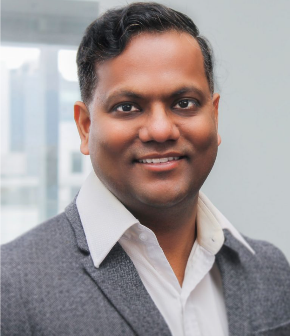
Sudip Shekhar
Professor, Electrical and Computer Engineering, UBC
Sudip Shekhar is a Professor in the Department of Electrical and Computer Engineering at UBC. Dr. Shekhar received his B.Tech. from the Indian Institute of Technology, Kharagpur, in 2003 and the MSc and PhD degrees from the University of Washington, in 2005 and 2008, respectively. From 2008 to 2013, he worked as a Research Scientist in the Circuits Research Laboratory at Intel Corporation, Hillsboro, Oregon. He then joined the ECE department in 2013.
Dr. Shekhar is a recipient of the Schmidt Science Polymath Award, the UBC Killam Teaching Prize, the Young Alumni Achiever Award by IIT Kharagpur, the IEEE Transactions on Circuit and Systems Darlington Best Paper Award, the IEEE Radio-Frequency IC Symposium Best Student Paper Award, IEEE Solid-State Circuits Society (SSCS) Predoctoral Fellowship, the Intel Foundation Ph.D. Fellowship, and the Analog Devices Outstanding Student Designer Award. He serves on the technical program committee of IEEE International Solid-State Circuits Conference (ISSCC). His research interests include integrated circuits for high-speed interfaces, silicon photonics, radio-frequency transceivers and sensor interfaces.
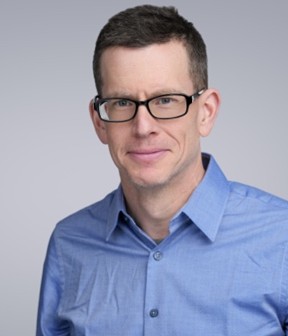
Glenn Cowan
Professor, Electrical and Computer Engineering, Concordia University
Glenn Cowan received the B.A.Sc. degree from the University of Waterloo, Canada and the M.S. and Ph.D. degrees from Columbia University, New York, NY, in 2001 and 2005, respectively. In 2005, he joined the Communications Technology Department at the IBM T. J. Watson Research Center, Yorktown Heights, NY. His research activities included CMOS circuits for high-speed communications, design for manufacturability, and circuits for the measurement of process variability. In 2007, he joined the Department of Electrical and Computer Engineering at Concordia University in Montreal, QC, Canada, where he is a professor. At Columbia, Dr. Cowan was a 2003 recipient of Analog Device’s Outstanding Student Designer Award. He was the 2005 recipient of Columbia’s Eliahu I. Jury award for outstanding achievement by a graduate student in the areas of systems, communications, or signal processing. His current research activities include low-power mixed-signal circuits for biomedical applications and wireline communication, as well as mixed-signal computation.
Prof. Cowan brings more than 20 years of mixed-signal IC design experience for applications ranging from programmable analog VLSI computation, biomedical signal acquisition, wireline communication, and power electronics for industrial applications. His work in analog computation launched 21st century interest in VLSI analog computation. He has explored various burst-mode schemes for power reduction, equalizer-based optical receivers, high-speed inductorless designs, noise analysis and optimization and more recently, drivers for microring modulators and their thermal stabilization. His expertise in this field is captured in his recently published book, Mixed-Signal CMOS for Wireline Communication, published in 2024 by Cambridge University Press.
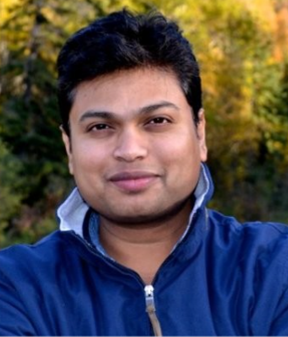
Masum Hossain
Associate Professor, Electrical and Computer Engineering, Carleton University
Masum Hossain is an Associate Professor in the Department of Electrical and Computer Engineering at Carleton University. Masum’s career is marked by a strong academic background and significant contributions to the field of electrical and computer engineering. He holds a Ph.D. from the University of Toronto, a B.Sc. from the Bangladesh University of Engineering and Technology and an M.Sc. from Queen’s University. His academic journey began with a graduate internship at Intel Circuit Research Lab and continued with roles at Gennum Corp. and Rambus Lab, where he focused on high-speed chip-to-chip communications and equalization techniques.
Hossain’s research interests include mixed-signal circuits and power-efficient solutions for high-speed interfaces. He has received numerous awards, including the Best Student Paper Award at the 2008 IEEE Custom Integrated Circuits Conference and Analog Device’s Outstanding Student Designer Award in 2010. His work has been recognized by the EPS Society Best Paper Award from the IEEE Transactions on Components, Packaging and Manufacturing Technology in 2021.
Ahmed Abumazwed
Staff Scientist, CMC Microsystems
Ahmed Abumazwed is a Staff Scientist at CMC Microsystems with over a decade of expertise in optical and RF design. He currently supports the advancement of photonic integrated circuit (PIC) technologies and photonic packaging projects. He was instrumental in the PDK development for GlobalFoundries’ GF45SPCLO components, including CWDM, Echelle Gratings and MMIs.
Prior to joining CMC Microsystems, Ahmed served as a Design Lead at Versawave (a division of Optelian/DZS), where he worked on AlGaAs electro-optic modulators for space applications. During this tenure, he collaborated closely with the European Space Agency (ESA) on rigorous space qualification standards. His industry experience also includes a role as an Optical Designer at OZ Optics, where he developed specialized fiber optic components for various applications, including telecom, sensing and aerospace sectors. Ahmed earned his B.A.Sc. from the College of Electronic Technology in Libya, his M.Sc. from Concordia University, and his Ph.D. from McGill University. As part of his doctoral work, he conducted award-winning collaborative research with RIKEN, Japan, focusing on the fabrication and characterization of gold nanostructures for Localized Surface Plasmon Resonance (LSPR) biosensing applications. His graduate work at Concordia University focused on Dielectric Resonator Antennas (DRAs) for WLAN applications.