

Built for IC Engineers
- New hires and early-career IC engineers (0–3 years) at Canadian semiconductor companies
- Final-year MSc/PhD students seeking IC design job readiness
- Industry professionals seeking structured high-speed interface and mixed-signal design upskilling
Course Overview
This advanced course introduces the architecture and circuit design principles behind high-speed serial interfaces used in modern data communication systems. Participants will explore transmitter and receiver building blocks, equalization techniques, and signal integrity considerations relevant to multi-gigabit serial links operating above 200 Gbps.
Developed with input from Canadian semiconductor employers and the Industry Training Advisory Group (ITAG).
Important Notes
- Training participants will have access to other proprietary and confidential information during the course; each participant is required to agree to the terms of the Access to Intellectual Property & Non-Disclosure Agreement at the time of registration.
- Cloud-hosted CAD/EDA tools provisioned by CMC Microsystems. No local installation required. Additional software license terms and conditions apply.
- Restrictions apply. As per the terms of the Cadence SOFTWARE LICENSE AND MAINTENANCE TERMS AND CONDITIONS FOR TIME BASED PRODUCT LICENSES, plus related Academic Use addenda (if applicable), use of the Cadence software is restricted to authorized third parties and excludes any competitors of Cadence. Compliance with the terms is required when accessing the CAD/EDA tools.
Prerequisites
- Prior analog IC design exposure (required)
- Transistor-level circuit fundamentals (required)
- Familiarity with Cadence tools for circuit simulation (required)
- Frequency response & signal integrity (recommended)
What You Will Learn
- Understand the architecture of high-speed serial communication links
- Analyze TX and RX building blocks at the transistor level
- Apply equalization and signal conditioning techniques (FFE, CTLE, DFE)
- Anaylze key SerDes performance trade-offs: power, data rate, channel loss, and circuit complexity
- Build foundational knowledge for SerDes-focused engineering roles
Topics Covered
- SerDes system architecture and link fundamentals
- Transmitter and receiver front-end design concepts
- Equalization techniques: FFE, CTLE, and DFE
- Clock generation and clock/data recovery (CDR)
- Channel impairments: loss, ISI, and eye-diagram interpretation
- Signal integrity considerations for multi-gigabit links
- Power, performance, and area trade-offs in high-speed I/O
- Architecture trade-off discussions
Weekly Schedule
Week | Lecture | Lab |
Week 1 | Thu, Sept. 10 — 13:00–15:00 EDT | Tue, Sept. 15 — 14:00–15:00 EDT |
Week 2 | Thu, Sept. 17 — 13:00–15:00 EDT | Tue, Sept. 22 — 14:00–15:00 EDT |
Week 3 | Thu, Sept. 24 — 13:00–15:00 EDT | Tue, Sept. 29 — 14:00–15:00 EDT |
Week 4 | Thu, Oct. 1 — 13:00–15:00 EDT | Tue, Oct. 6 — 14:00–15:00 EDT |
Week 5 | Thu, Oct. 8 — 13:00–15:00 EDT | Tue, Oct. 13 — 14:00–15:00 EDT |
Week 6 | Thu, Oct. 15 — 13:00–15:00 EDT | Tue, Oct. 20 — 14:00–15:00 EDT |
Week 7 | Thu, Oct. 22 — 13:00–15:00 EDT | Tue, Oct. 27 — 14:00–15:00 EDT |
Week 8 | Thu, Oct. 29 — 13:00–15:00 EDT | Tue, Nov. 3 — 14:00–15:00 EDT |
Outcomes
- Describe the architecture of high-speed serial links and explain the role of TX/RX building blocks
- Apply equalization techniques (FFE, CTLE, DFE) and evaluate their trade-offs
- Interpret eye diagrams and assess signal integrity for multi-gigabit channels
- Understand power, data rate, channel loss, and circuit complexity trade-offs in SerDes circuit design
Equipment Requirements
- Windows, macOS, or Linux laptop
- Stable high-speed internet connection
- Modern web browser: Chrome, Edge, Firefox, or Safari
- VPN / SSH / Remote Desktop / VNC access, if required
- 8 GB RAM minimum, 16 GB recommended
- Power adapter for full-day training
Instructor
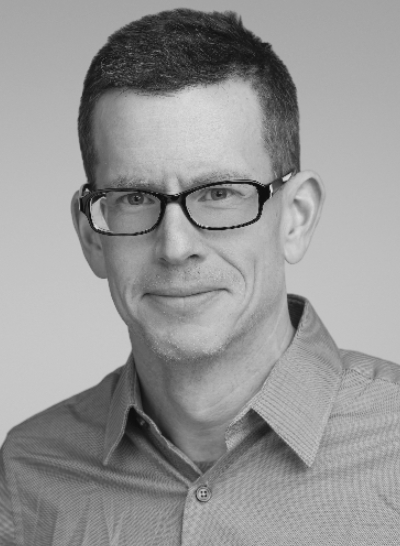
Glenn Cowan
Lead Instructor
Professor, Electrical and Computer Engineering, Concordia University
Glenn Cowan received the B.A.Sc. degree from the University of Waterloo, Canada and the M.S. and Ph.D. degrees from Columbia University, New York, NY, in 2001 and 2005, respectively.
In 2005, he joined the Communications Technology Department at the IBM T. J. Watson Research Center, Yorktown Heights, NY. His research activities included CMOS circuits for high-speed communications, design for manufacturability, and circuits for the measurement of process variability. In 2007, he joined the Department of Electrical and Computer Engineering at Concordia University in Montreal, QC, Canada, where he is a professor. At Columbia, Dr. Cowan was a 2003 recipient of Analog Device’s Outstanding Student Designer Award. He was the 2005 recipient of Columbia’s Eliahu I. Jury award for outstanding achievement by a graduate student in the areas of systems, communications, or signal processing. His current research activities include low-power mixed-signal circuits for biomedical applications and wireline communication, as well as mixed-signal computation.
Prof. Cowan brings more than 20 years of mixed-signal IC design experience for applications ranging from programmable analog VLSI computation, biomedical signal acquisition, wireline communication, and power electronics for industrial applications. His work in analog computation launched 21st century interest in VLSI analog computation. He has explored various burst-mode schemes for power reduction, equalizer-based optical receivers, high-speed inductorless designs, noise analysis and optimization and more recently, drivers for microring modulators and their thermal stabilization. His expertise in this field is captured in his recently published book, Mixed-Signal CMOS for Wireline Communication, published in 2024 by Cambridge University Press.
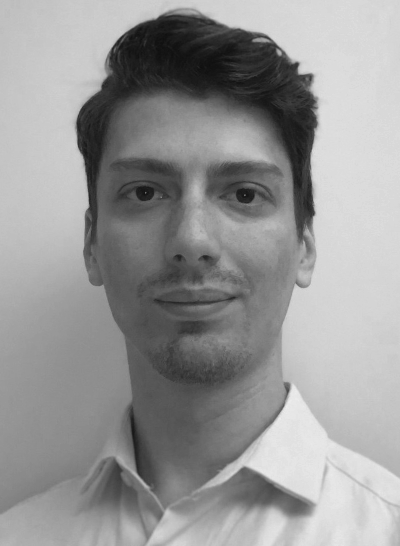
Anatoly Syutkin
Lab Instructor
Anatoly Syutkin received his BEng (2018) and MASc (2021) degrees from Concordia University, Montreal, Canada. He is presently a PhD student in Electrical and Computer Engineering under the supervision of Dr. Glenn Cowan.
His primary research topic is the design of scalable, efficient, and robust analog and digital integrated circuits for neuromorphic computing. His work combines system-level simulations of neural networks and transistor-level designs. His other research interests include circuits for high-speed communication, analog filter design, and oscillator-based computing. He has frequently been the teaching assistant and lab demonstrator for electronics and VLSI courses at Concordia University.


