







Event Schedule
Day One: November 23
| Time | Speaker | Topic |
|---|---|---|
| 8:00 | Breakfast | |
| 8:45 | Opening Remarks | |
| 9:00 | Benjamin Brock | Quantum Error Correction with (and of) Multi-level Systems |
| 10:00 | Coffee | |
| 10:30 | Chen Wang, Angela Kou, Bradley Hauer | Panel 1: Future Direction of Academic Superconducting Quantum Device Research |
| 11:30 | Break | |
| 12:00 | Lunch | |
| 13:00 | Angela Kou | Materials Matters in Superconducting Qubits |
| 14:00 | Karel Côté | C2MI activities and services |
| 14:30 | Coffee | |
| 15:00 | Elizabeth Champion | Large-spin Hamiltonians for Superconducting Qudit Control |
| 16:00 | Networking and reception | Reception with cash bar and light snacks |
| 17:00 | End of day | |
Day Two: November 24
| Time | Speaker | Topic |
|---|---|---|
| 8:00 | Breakfast | |
| 8:45 | Opening Remarks | |
| 9:00 | Bradley Hauer | Millimeter-wave Superconducting Quantum Devices |
| 10:00 | Coffee | |
| 10:30 | Panel 2: Karel Côté, Nelson Briones, Allison MacDonald | Industrial Scale Superconducting Quantum Device Production |
| 11:30 | Break | |
| 12:00 | Lunch | |
| 13:00 | Kevin Chou | Building Erasure Qubits Using Dual-rail Superconducting Cavities
AbstractBuilding Erasure Qubits Using Dual-rail Superconducting CavitiesSpeaker: Kevin Chou Erasure qubits are engineered so that their dominant errors can be detected without the use of additional ancilla qubits. In a quantum error correction (QEC) context, erasure qubits can achieve higher error thresholds and larger effective code distances than qubits limited by Pauli errors. As such, they have emerged as a promising path to reducing the overhead of scaling fault-tolerant quantum computation. In this presentation, we discuss how we realize erasure qubits using a dual-rail encoding in a pair of superconducting cavities, where the logical states are defined in the single-photon manifold of the two cavity modes. The dominant error in this system is single-photon loss to the vacuum state, which can be readily detected as an erasure. Residual errors are primarily dephasing, at roughly an order of magnitude lower rate, and bit-flip errors are remarkably rare, occurring at the parts-per-million level. We also present a full gate set for operating dual-rail cavity qubits and show that this error hierarchy is largely preserved across all operations. In particular, we focus on the implementation of our two-qubit gate and on the special properties that make it especially useful for QEC. We conclude with an outlook on how erasure detection and the error hierarchy can be used to realize efficient and scalable QEC. |
| 14:00 | Yu (Eric) Zhu | Modeling Device-to-Device Variability in Superconducting Qubits
AbstractModeling Device-to-Device Variability in Superconducting QubitsSpeaker: Yu (Eric) Zhu Authors: Wanting Zhang, Aldilene Saraiva-Souza, Zhouyin Zhanghao, Nathaniel Vegh, Fadime Bekmambetova, Hong Guo, Félix Beaudoin, Yu Zhu (presenter) Solving practical quantum computing problems may require 105 to 107 noisy physical qubits. Device-to-device variability poses a major challenge to the calibration and tuning of quantum processors at this scale. Among the many sources of variability, Josephson junctions are particularly important because quantum tunneling is exponentially sensitive to atomic-scale structural details. In this talk, we investigate the effects of interface roughness, hydrogen contamination, and stoichiometry variations in amorphous Josephson junction barriers on device-to-device variability. Our simulations combine the atomistic modeling tool NanoDCAL, the device modeling tool QTCAD®, and machine-learning interatomic potentials. Finally, we discuss strategies for integrating atomistic simulations with device-level modeling to enable a multiscale understanding of variability in superconducting qubits. |
| 14:30 | Coffee | |
| 15:00 | Srivatsan Chakram | Control of Multimode Bosonic Circuit QED Systems |
| 16:00 | Closing remarks | |
Speakers
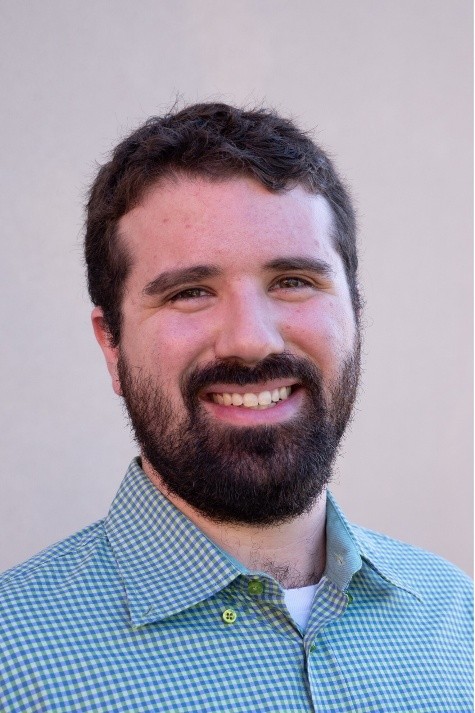
Bradley Hauer
University of Waterloo
Topic: Millimeter-wave Superconducting Quantum Devices
Bradley Hauer completed his BSc and PhD in Physics at the University of Alberta. Here he worked in the group of Prof. John Davis studying on-chip silicon optomechanical cavities operating at infrared wavelengths inside the cryogenic environment of a dilution refrigerator. Upon graduating with his PhD in 2019, Dr. Hauer held NSERC Postdoctoral and Banting fellowships in the Advanced Microwave Photonics group at the National Institute of Standards and Technology (NIST) in Boulder, Colorado. Here, he researched superconducting optomechanical circuits and parametric amplifiers operating in the quantum regime under the supervision of Dr. John Teufel.
As of April 2024, Dr. Hauer is an Assistant Professor in the Department of Electrical and Computer Engineering and the Institute for Quantum Computing (IQC) at the University of Waterloo where he is continuing his research on optomechanical cavities and superconducting circuits.
Angela Kou
University of Illinois Urbana-Champaign
Topic: Materials Matters in Superconducting Qubits
Angela Kou is an experimental physicist specializing in superconducting circuits. She did her graduate work at Harvard University on microscopic effects of the fractional quantum Hall effect. Angela’s postdoctoral research at Yale University was focused on superconducting qubits, and particularly on the fluxonium.
Angela then worked as a senior researcher in the Microsoft Quantum Lab at Delft where she supervised the circuit QED group. Angela is currently an associate professor in the UIUC physics department.
Benjamin Brock
Université de Sherbrooke
Topic: Quantum Error Correction with (and of) Multi-level Systems
To realize quantum computation at scale, fragile quantum states must be protected from decoherence using quantum error correction (QEC), which requires a quantum computer to be large enough to host many redundant copies of the logical quantum states being used for computation. The conventional approach to QEC uses many physical qubits to encode each logical qubit, but this approach is extremely resource intensive, requiring hundreds or even thousands of physical qubits per logical qubit.
In this talk, I will argue that multi-level systems such as oscillators and qudits (d-level quantum systems with d>2) serve as more hardware-efficient building blocks of a quantum computer. First, they provide greater redundancy than qubits, enabling QEC codes that require fewer individual physical systems per logical qubit. Second, working with qudits as the fundamental unit of quantum information enables more efficient gate synthesis and algorithm compilation. I will focus on a superconducting circuit-based experiment motivated by these two lines of reasoning: using an oscillator for redundancy, we realized error-corrected logical qudits with d>2 for the first time [Brock et al., Nature (2025)]. Looking ahead, I will outline new directions and discuss the trade-offs between logical dimensionality, logical lifetime, and hardware efficiency.
Elizabeth Champion
Rochester University
Topic: Large-spin Hamiltonians for Superconducting Qudit Control
In this talk I will discuss the high-dimensional superconducting qudits developed in the Blok lab at Rochester, beginning by motivating qudit-based processors and introducing our high-EJ/EC transmon device. I will then discuss two related projects which use this device. The first achieves efficient digital control of the qudit state by using the rotations of an effective high-angular momentum spin as the underlying primitive gates. The second extends this idea to analog quantum simulation, realizing a single-qudit simulator of the Lipkin-Meshkov-Glick model, a paradigmatic model of quantum criticality in many-body systems. Through this analogy between disparate physical systems—high-dimensional spins on the one hand and quantized oscillations of charge on the other—I aim to show that even a single transmon displays rich and interesting physics when its full multi-level Hilbert space is utilized.
In this talk, I will argue that multi-level systems such as oscillators and qudits (d-level quantum systems with d>2) serve as more hardware-efficient building blocks of a quantum computer. First, they provide greater redundancy than qubits, enabling QEC codes that require fewer individual physical systems per logical qubit. Second, working with qudits as the fundamental unit of quantum information enables more efficient gate synthesis and algorithm compilation. I will focus on a superconducting circuit-based experiment motivated by these two lines of reasoning: using an oscillator for redundancy, we realized error-corrected logical qudits with d>2 for the first time [Brock et al., Nature (2025)]. Looking ahead, I will outline new directions and discuss the trade-offs between logical dimensionality, logical lifetime, and hardware efficiency.
| Name | Institution | Topic |
|---|---|---|
| Srivatsan Chakram | Rutgers, The State University of New Jersey | Control of multimode bosonic circuit QED systems |
| Kevin Chou | D-Wave Systems New Haven (formerly Quantum Circuits Inc) |
Building Erasure Qubits Using Dual-rail Superconducting Cavities
AbstractBuilding Erasure Qubits Using Dual-rail Superconducting CavitiesSpeaker: Kevin ChouErasure qubits are engineered so that their dominant errors can be detected without the use of additional ancilla qubits. In a quantum error correction (QEC) context, erasure qubits can achieve higher error thresholds and larger effective code distances than qubits limited by Pauli errors. As such, they have emerged as a promising path to reducing the overhead of scaling fault-tolerant quantum computation. In this presentation, we discuss how we realize erasure qubits using a dual-rail encoding in a pair of superconducting cavities, where the logical states are defined in the single-photon manifold of the two cavity modes. The dominant error in this system is single-photon loss to the vacuum state, which can be readily detected as an erasure. Residual errors are primarily dephasing, at roughly an order of magnitude lower rate, and bit-flip errors are remarkably rare, occurring at the parts-per-million level. We also present a full gate set for operating dual-rail cavity qubits and show that this error hierarchy is largely preserved across all operations. In particular, we focus on the implementation of our two-qubit gate and on the special properties that make it especially useful for QEC. We conclude with an outlook on how erasure detection and the error hierarchy can be used to realize efficient and scalable QEC. |
| Yu (Eric) Zhu | Nanoacademic technologies |
Modeling Device-to-Device Variability in Superconducting Qubits
AbstractModeling Device-to-Device Variability in Superconducting QubitsSpeaker: Yu (Eric) ZhuAuthors: Wanting Zhang, Aldilene Saraiva-Souza, Zhouyin Zhanghao, Nathaniel Vegh, Fadime Bekmambetova, Hong Guo, Félix Beaudoin, Yu Zhu (presenter) Solving practical quantum computing problems may require 105 to 107 noisy physical qubits. Device-to-device variability poses a major challenge to the calibration and tuning of quantum processors at this scale. Among the many sources of variability, Josephson junctions are particularly important because quantum tunneling is exponentially sensitive to atomic-scale structural details. In this talk, we investigate the effects of interface roughness, hydrogen contamination, and stoichiometry variations in amorphous Josephson junction barriers on device-to-device variability. Our simulations combine the atomistic modeling tool NanoDCAL, the device modeling tool QTCAD®, and machine-learning interatomic potentials. Finally, we discuss strategies for integrating atomistic simulations with device-level modeling to enable a multiscale understanding of variability in superconducting qubits. |